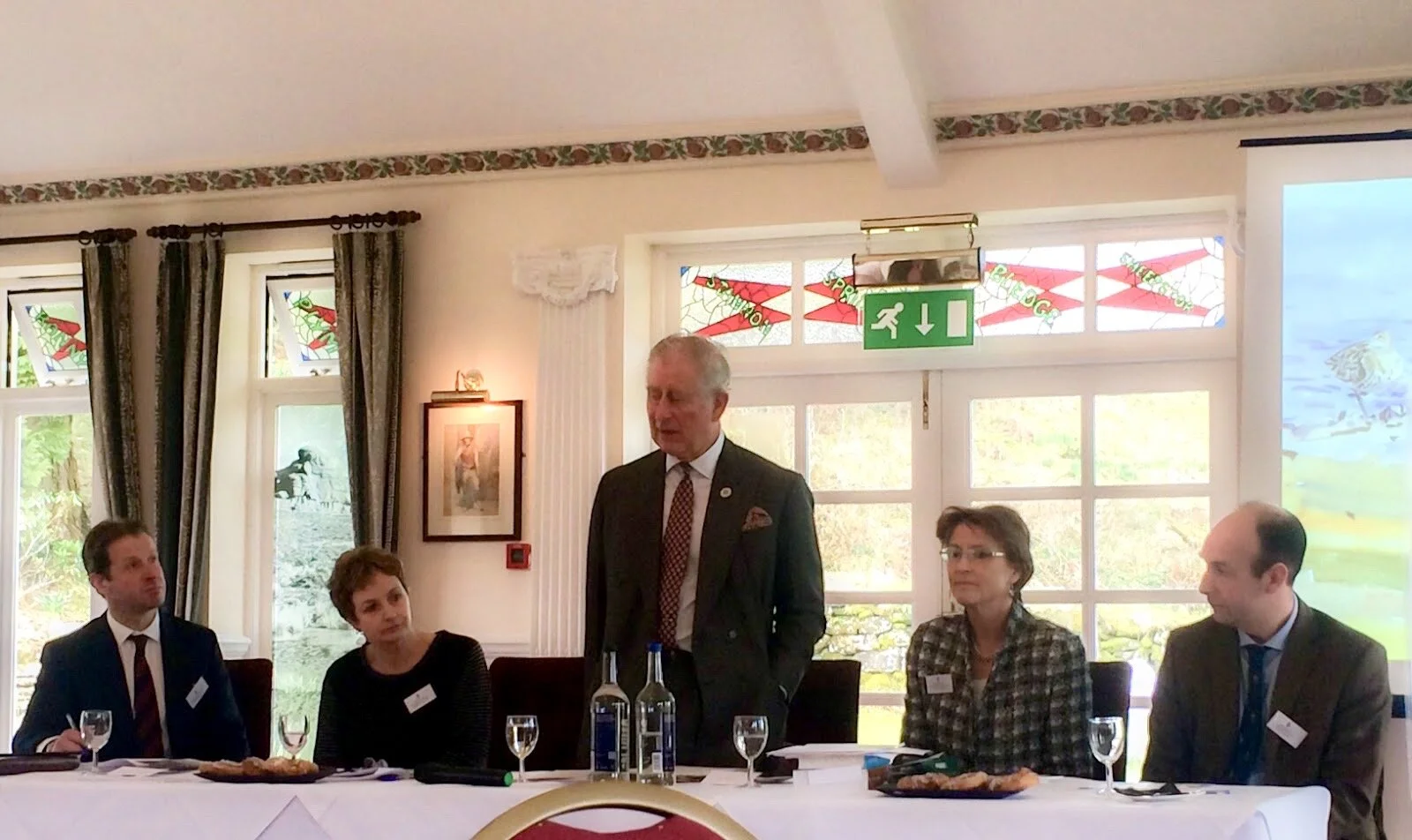
Tom Orde Powlett, Mary Colwell, HRH Prince Charles, Teresa Dent, Tom Stratton. Photo: Rick Simpson
HRH Prince of Wales convened a meeting on 23 March 2018 in the Two Bridges Hotel on Dartmoor to discuss the plight of upland waders. There were representatives from Natural England, Game and Wildlife Conservation Trust (GWCT), RSPB, BTO, Devon Wildlife Trust, Wader Quest, Duchy of Cornwall, Game Keepers Organisation, Dartmoor National Parks Authority, independent conservationists and commentators. Although the title included all waders, the discussions were almost exclusively confined to Curlew.
The day started with a number of presentations, chaired by Teresa Dent the CEO of GWCT:
Tom Orde Powlett on the conservation of Curlew in the Pennines.
Amanda Perkins on Curlew recovery in the Shropshire Hills and Welsh Marches.
Dr David Douglas on the RSPB Curlew Recovery Programme in the uplands.
Dr Geoff Hilton, Wildfowl and Wetlands Trust, on headstarting as a possible tool to aid recovery of populations.
Dr Andrew Hoodless, GWCT, on predator control as a tool for improving Curlew breeding success.
Jon Avon, Field Officer for the Dartmoor wader project, on the desperate state of Dartmoor’s waders.
Andrew Sells, CEO of Natural England – What can NE do to help?
Kevin Cox, Chairman of the RSPB – What can the RSPB do to help?
The audience were then asked to discuss in groups a number of set questions:
How do we more fully engage with practitioners on the ground?
What measures do we need to make Curlew recovery work?
Do we agree with the outcomes of the Welsh Curlew Conference?
How can DEFRA and Natural England help?
How do we effectively share experience and learning to all practitioners?
After 40 minutes of discussion, HRH arrived, and a 45-minute discussion was chaired by Mary Colwell, with representatives from each table summarising their findings. After lunch there was a site visit to a nearby area targeted for Curlew recovery (reintroduction).
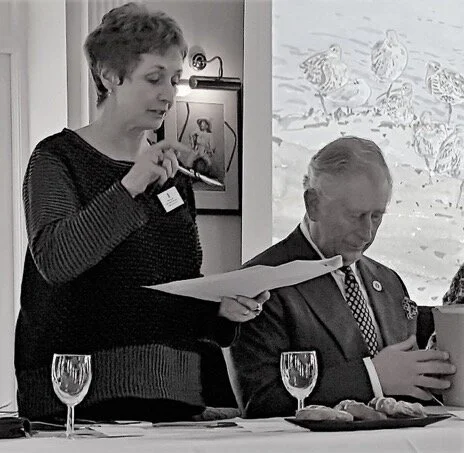
Mary Colwell and Prince Charles
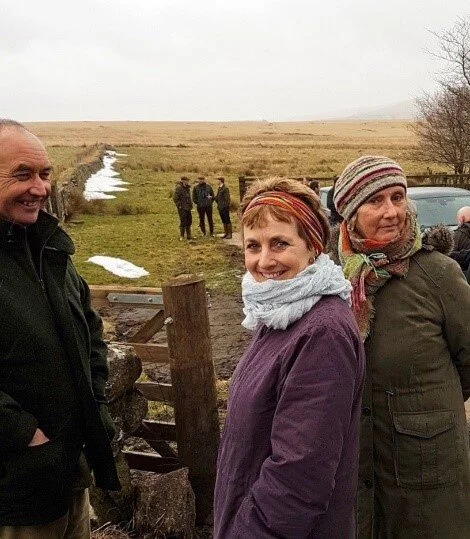
Jon Avon, Mary Colwell, Karen Lloyd on the Dartmoor Summit field trip. Photo Rob Yorke
Some of the most important points raised through the discussions were:
The need for a long-term vision for wader recovery, not limited to a few years. Any schemes also needed to be flexible, allowing for variation of conditions in different areas and for change if existing practice proved not to be working.
The need for an open and honest public discussion on predator control.
The need for a central, independent hub for dissemination of information (via a website?), a liaison point for various groups and to ‘be across’ all national projects. Possibly set up paid Curlew Champions who know their local area and act as a central point in partnership with various organisations. The Curlew Forum was raised as an example.
It was a stimulating day, HRH was fully engaged with the discussion and gave a passionate summing-up of his thoughts on Curlew and encouraging everyone to do what they can so that we don’t lose its haunting, beautiful call across our landscapes. The conveners of the day will now send next steps and findings to HRH on how to take things forward.
Mary Colwell