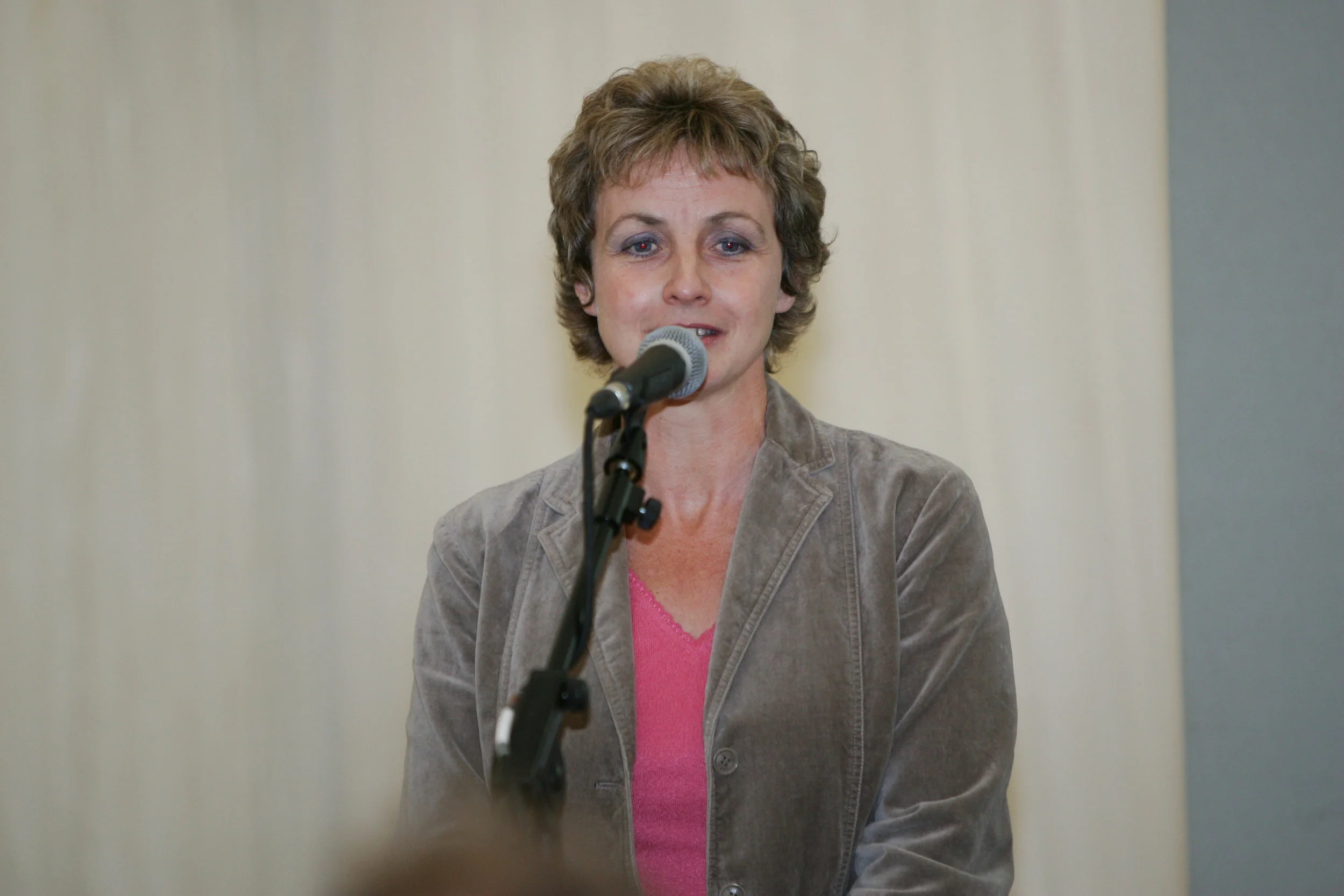
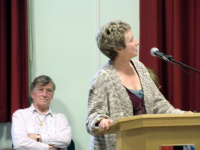
Mary Colwell gave the following reflection at the 25th anniversary celebration of the Columbans 'Vocation for Justice' newletter at Heythrop in May 2011. She is an advisor to the Catholic Bishops’ Conference of England and Wales on Environmental Justice. Mary was a producer at the BBC Natural History Unit for 20 years in both TV and radio, and is a multi award winning programme maker and commentator on Religion and the Environment.
I grew up in Stoke before the pot banks were demolished in the 50s and 60s. Now it looks like any other city - cleaner air, for example. More people are living well and we are tackling some of the great killer diseases – so why the fuss and what are we worried about?
James Lovelock is an environmentalist who helped us realise that all is not rosy and his predictions for the next 50 years or so are horrible. Much of Europe, the Sahara, and major cities under water, mass deaths bringing population down to 1 billion people from the 6.5 billion we have now, and they will be living a hand to mouth existence.
The problem says Lovelock and others is that we only have one Earth and it is in a changing state because of the sheer amount of stuff we take out of it and rubbish we throw into it and what we are doing to the atmosphere. The Earth is not in peril as such; it will continue but in another state. It can’t stay in its current state given the demands on it.
One of the major problems is the demands of a rising population – and crucially, a rising population that is getting richer. In 1985, 207.3 million people in Europe lived in the countryside. By 2025 it will be 128.4 million - a rapid decline in rural population and an increase in city living. In 2015, there will be five urban agglomerations in 5,000,000+ size categories, namely: Paris (9.6 million), Moscow (9.2 million), London (7.6 million), Essen (6.5 million), and St. Petersburg (5.1 million). By 2030, 2 out of 3 people will live in towns and cities.
The continuing heavy toll from "natural" disasters is strongly associated with large and growing populations in risk-prone areas, such as flood plains and low-lying coastal regions, such as we have seen recently in Japan.
Energy consumption has increased dramatically, with more coming from gas and renewables. But the overall efficiency of energy production remains extremely low: on average, more than 90 percent of energy consumed is lost or wasted in the process of conversion from raw materials such as coal to the final energy service such as the light to read a book. The energy efficiencies today in India and China are similar to that of Europe early in the Industrial Revolution. Chernobyl and Fuskishima demonstrate the problems of increasingly relying on nuclear power.
In 1970 there were about 120 million cars in the world. Today there are 600 million cars on the road, expected to increase to 1.2 billion by 2020.
The sheer amount of stuff now used all over the world is staggering. And so much of it is wasted and thrown out. There is a lot of collateral damage, such as the image of the dead albatross with bottle tops in its stomach.
We literally tear life out of the oceans. Many of the poorest people of the world depend on fish for food. By the middle of this century will they be able to? Food production will need to increase by 60% to cope with the rise in population by 2030. 50 years ago farmers applied only 17 m tonnes of fertiliser to crops, but today it is 8 times higher. Demands on soil are increasing yearly.
At one time we had more farmland birds, more small mammals, more wildflowers, more hedgerows. We have lost half the world’s forests, half the world’s wetlands and half the world’s grasslands to increasing urbanisation and growth.
We are in an Age of Plenty, but we need to move to an Age of Creativity. But how do we make this move? I think we have to use everything in our power to make it happen.
Certainly awareness has grown, that is undeniable. Creation theology is a growing area of interest, and lifting this out of the fringe and into mainstream thinking and teaching is essential. It needs to be taught in seminaries and universities as mainstream and attract good students. Perhaps a chair or bursary?
We must establish sectors of the Bishops conferences around the world like Catholic Earthcare in Australia. This must be encouraged and funds found.
Promoting grass roots activities is vital – such as Livesimply and Ecocongregation and the Earth Abbey initiative that started in Bristol and has such potential, especially the grow zone for food production.
And campaigns like ‘The Wave’ on Climate Change are all vital.
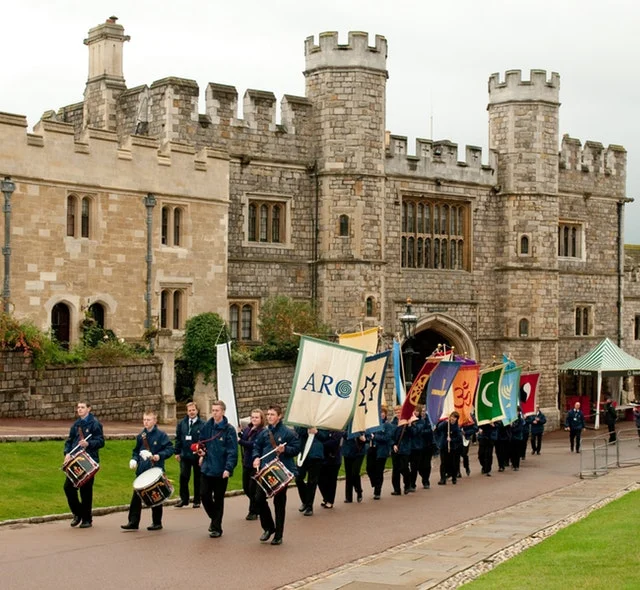
Celebrating successes in liturgy, in the media and at events such as the Windsor Conference – ‘Many heavens, One Earth’ - are good for boosting morale.
Good understandable literature is also required – Columban Sean McDonagh started something that could go big, but not just books, but new media too: podcasts, twitter. Websites like Christian Ecology Link and so on are doing great work and need to be supported.
Most of all we need to help people move between the peak of the Age of Plenty to the stability of the Age of Creativity with the minimum pain and the maximum awareness of a new relationship with the Earth.
Columbans are right there doing their bit and have been for years - they are an inspiration to us all.

Religion and Conservation Events